
Weight loss injections have emerged as an effective option for people struggling with obesity and metabolic conditions leading to weight gain. Weight loss medications such as Wegovy, Mounjaro, Saxenda, and Orlistat help reduce appetite, regulate glucose levels, and support weight loss goals. But like all medications, they also come with potential side effects.
This guide explores weight loss injections side effects, explains how different medications compare, and offers practical tips to minimise discomfort.
GLP‑1 Weight Loss Injection Side Effects
GLP‑1 receptor agonists mimic the natural hormone GLP‑1, which slows gastric emptying, enhances insulin secretion, and reduces appetite. These drugs include:
- Semaglutide (Wegovy, Ozempic)
- Tirzepatide (Mounjaro)
- Liraglutide (Saxenda)
Common GLP‑1 side effects:
- Nausea
- Vomiting
- Diarrhoea or constipation
- Bloating
- Stomach pain
- Headaches
- Fatigue
In the STEP 1 trial, participants using semaglutide 2.4 mg (Wegovy) reported the following during the first weeks:
- Nausea (44.2%)
- Diarrhoea (29.5%)
- Vomiting (24.2%)
- Constipation (23.4%)
Most symptoms subsided after the dose-titration phase. Gradual dose increases are key to improving tolerability.

Common Side Effects of Weight Loss Injections
There are shared side effects of weight loss medications, most of which are gastrointestinal in nature:
- Digestive issues (nausea, bloating, diarrhoea)
- Injection site redness or swelling
- Mild headaches
- Loss of appetite
- Fatigue
- Dizziness
These are often most pronounced during dose escalation and improve with time.
Rare Side Effects
Although most side effects are mild and temporary, medicines such as Wegovy and Mounjaro can occasionally cause serious complications. The MHRA guidance on GLP-1 medicines provides important safety advice for patients using these treatments.
Pancreatitis
GLP-1 medicines have been associated with acute pancreatitis, which causes inflammation of the pancreas. In January 2026, the MHRA strengthened its warnings following rare reports of severe pancreatitis, including necrotising and fatal cases.
Severe, persistent abdominal pain that may spread to the back, with or without vomiting, requires urgent medical assessment.
Gallbladder Problems
Weight loss injections may increase the risk of gallstones and gallbladder inflammation as per the STEP 1 trial. Symptoms can include upper abdominal pain, nausea and vomiting. Fever or yellowing of the skin or eyes requires prompt medical attention.
Gallstones and other gastrointestinal adverse reactions are listed in the official Wegovy UK prescribing information.
Kidney Problems
Persistent vomiting or diarrhoea can cause significant dehydration, which may place additional strain on the kidneys. Patients with existing kidney conditions or those taking medicines such as diuretics may require closer monitoring.
Sudden Vision Changes
In February 2026, the MHRA highlighted a very rare risk of non-arteritic anterior ischaemic optic neuropathy (NAION) associated with semaglutide, the active ingredient in Wegovy. This condition can cause sudden, painless deterioration or loss of vision, often affecting one eye.
Anyone experiencing sudden vision loss or a rapid deterioration in eyesight while taking semaglutide should seek urgent medical assessment.
Severe Allergic Reactions
Rare serious allergic reactions, including anaphylaxis and angioedema, can occur with some weight loss injections. Symptoms such as swelling of the face or throat, difficulty breathing or sudden collapse require immediate emergency assistance.
These reactions, along with pancreatitis, gallbladder problems and delayed gastric emptying, are included in the official Mounjaro UK prescribing information.
Side Effects by Medication
Understand how different weight loss solutions affect your body, from digestive discomfort to hormonal shifts, and know what to expect before you start.
Mounjaro (tirzepatide)
Mounjaro activates both GLP‑1 and GIP receptors. In the SURMOUNT-1 trial, side effects included:
- Nausea (31.0%)
- Diarrhoea (23.0%)
- Constipation (17.0%)
Vomiting (12.0%)
Despite higher weight loss than semaglutide in some studies, tolerability varies by individual.
Wegovy (semaglutide)
In STEP 1, 85% of participants using semaglutide reported at least one gastrointestinal side effect, but these were mostly mild to moderate in severity. Serious adverse events were reported more in the semaglutide group than in the placebo group.
Saxenda (liraglutide)
Saxenda is another GLP‑1 drug, approved for daily use in weight management. An RCT trial on liraglutide reported side effects:
- Nausea (40%)
- Vomiting (16%)
- Constipation (20%)
Orlistat (Alli/Xenical)
Unlike GLP‑1s, Orlistat weight loss tablets block fat absorption. Its side effects are largely gastrointestinal:
- Oily stools
- Urgent or frequent bowel movements
- Abdominal cramps
Orlistat is not absorbed systemically, so systemic side effects are rare. However, it may reduce the absorption of fat-soluble vitamins (A, D, E, K).
Retatrutide
In early-phase trials, Retatrutide showed substantial weight loss (up to 24.2% over 48 weeks). However, it also had a higher rate of:
- Nausea (57%)
- Vomiting (39%)
However, Retatrutide is not available currently in the UK and is not MHRA approved.
Overcome the Side Effects of Weight Loss Injections
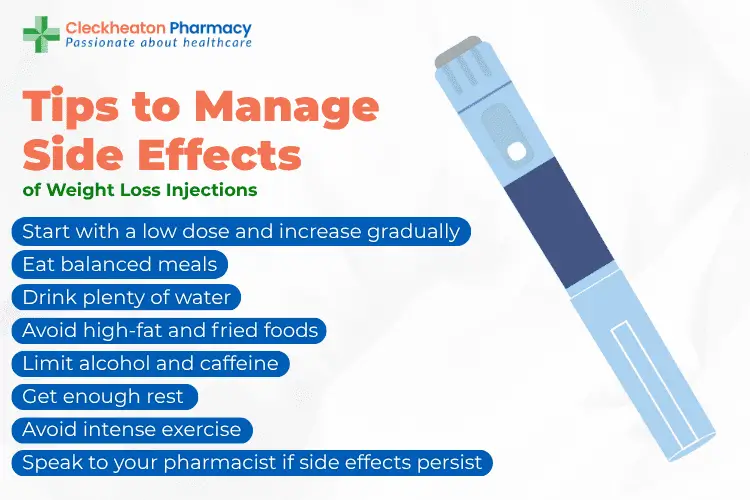
Many weight loss injections’ side effects can be reduced or avoided through lifestyle and medication strategies:
- Start with a low dose and gradually increase under medical supervision
- Eat small, bland meals to ease digestion
- Stay well hydrated, especially during hot weather or after vomiting, as it causes dehydration
- Avoid high-fat and fried foods, which can trigger or worsen symptoms
- Rest after injections and limit intense activity if you feel dizzy or fatigued
Tips to Reduce the Side Effects
Here are some tips to improve your experience with treatment:
- Space meals evenly and eat slowly
- Choose soluble fibre (e.g., oats, bananas) to reduce constipation
- Avoid alcohol and caffeine in the early weeks
- Report persistent or severe side effects to your pharmacist or GP
Cleckheaton Pharmacy offers expert guidance and weight loss support. Book a consultation today to learn more about safe and effective treatment options.
FAQs
What are the most common side effects of weight loss injections?
Gastrointestinal issues such as nausea, constipation, diarrhoea, and reduced appetite are the most reported symptoms with weight loss injections. These typically occur during the initial weeks and settle with continued use.Add image
Do weight loss injections cause hair loss?
Hair loss is not a listed side effect of GLP‑1 drugs, but rapid weight loss from any method can disrupt hair growth cycles.
Are there serious risks, such as pancreatitis or gallbladder problems?
Yes. Even though it is rare, GLP‑1 drugs may increase the risk of pancreatitis and gallstones, especially in those with a history of these conditions. In case of persistent symptoms, immediate medical attention is required.
Can weight injections lead to low blood sugar or hypoglycemia?
GLP‑1 drugs are unlikely to cause hypoglycemia alone. However, when used with insulin, the risk increases. Monitoring blood sugar is advised for diabetic patients.
How do GLP-1 medications like Ozempic or Wegovy affect glucose levels?
GLP-1 medications slow gastric emptying and increase insulin secretion in response to food, helping regulate post-meal glucose spikes. This makes these drugs suitable for people with prediabetes or type 2 diabetes.
Can weight loss injections interact with other medications?
Yes. Because GLP‑1s slow digestion, they can affect how quickly other oral medications are absorbed. Speak with our experts about any prescriptions or supplements you are currently taking.