

| TL;DR Weight loss injections such as Wegovy and Mounjaro are prescription medications used to support weight loss by reducing appetite, increasing fullness, and improving blood sugar control. Clinical trials show they are generally safe and effective for eligible adults when prescribed and monitored by healthcare professionals. Most side effects are mild digestive symptoms such as nausea, diarrhoea, or constipation, which usually improve as the body adjusts. Serious risks are rare but can include pancreatitis or gallbladder issues. These medications should only be used after a proper medical assessment and obtained through regulated providers to ensure safety. |
Weight loss injections have become one of the most widely discussed treatments for obesity in recent years. Medications such as Wegovy and Mounjaro are increasingly prescribed across the UK, helping thousands of patients achieve significant weight loss under medical supervision. As their popularity grows, many patients want to understand how these treatments work and whether they are safe.
At Cleckheaton Pharmacy, patients frequently ask about weight loss injections safety, including potential side effects and long-term risks, before starting treatment. These concerns are valid and deserve clear, evidence-based answers supported by clinical research. This guide explains how safe weight loss injections are, common side effects, possible risks, and why prescription weight loss injections should always be used under proper medical supervision.
What Are Weight Loss Injections?
Weight loss injections are prescription medications designed to help regulate appetite and metabolism. They work by mimicking hormones naturally produced in the gut that influence hunger, satiety, and blood sugar control. Currently, the two most widely used prescription weight loss injections in the UK are:
Wegovy (Semaglutide)
Wegovy contains semaglutide, a GLP-1 receptor agonist developed by Novo Nordisk.
It works by:
- Reducing appetite
- Increasing feelings of fullness
- Slowing stomach emptying
- Improving blood sugar control
Wegovy is administered once weekly by subcutaneous injection.
Mounjaro (Tirzepatide)
Mounjaro contains tirzepatide, developed by Eli Lilly.
Unlike earlier medications, tirzepatide activates two hormonal pathways (GIP and GLP-1), which enhance its metabolic effects.
Mounjaro also:
- Suppresses appetite
- Improves insulin sensitivity
- Slows digestion
- Supports sustained calorie reduction
Like Wegovy, it is taken once weekly.
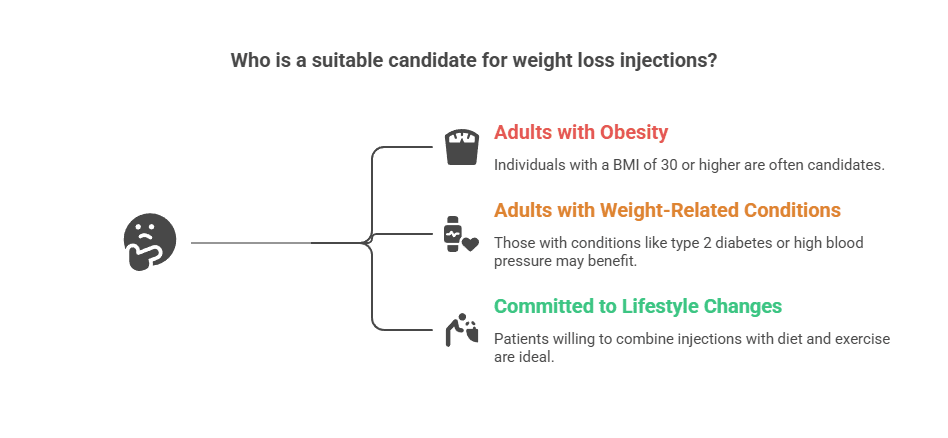
Both medications are approved for chronic weight management in adults with obesity or weight-related health conditions.
Both medications are approved by the UK Medicines and Healthcare products Regulatory Agency (MHRA), which reviews extensive clinical safety and efficacy data before authorising treatments.
Weight Loss Injection Side Effects
Like any medication, weight loss injections can cause side effects, although most are mild and temporary. The majority of weight loss injection side effects occur during the early stages of treatment or when the dose is increased.
Common Side Effects
The most frequently reported side effects include gastrointestinal symptoms. These may include:
Nausea
Nausea is the most common side effect. It usually occurs when starting treatment or increasing the dose and often improves as the body adjusts.
Eating smaller meals and avoiding fatty foods can help reduce nausea.
Diarrhoea or Constipation
Changes in digestion can occur because these medications slow gastric emptying.
Increasing hydration and fibre intake often helps regulate digestion.
Vomiting
Vomiting is less common and usually linked to eating large meals too quickly.
Fatigue
Some patients experience temporary fatigue during the first few weeks of treatment, often related to reduced calorie intake.
Injection Site Reactions
Mild redness, swelling, or tenderness can occur at the injection site but typically resolves quickly.
Mounjaro Safety: What Clinical Studies Show
The safety of tirzepatide has been studied in the SURMOUNT clinical trial programme.
SURMOUNT-1 Trial
This 2022 study included 2,539 adults with obesity. The results showed:
- Significant weight loss compared with placebo
- Gastrointestinal side effects were the most common
- Only 4.3–7.1% of participants discontinued treatment due to adverse events
SURMOUNT-4 Trial
This study monitored participants for up to 88 weeks and found that the Mounjaro safety profile remained consistent over longer-term treatment.
SURMOUNT-5 Trial
A direct comparison between tirzepatide and semaglutide found that gastrointestinal side effects causing treatment discontinuation were lower with tirzepatide (2.7%) compared with semaglutide (5.6%).
These findings suggest Mounjaro may be slightly better tolerated for some patients.
Wegovy Safety: What Clinical Studies Show
The safety of semaglutide for weight management has been demonstrated in the STEP clinical trial programme.
STEP-1 Trial
The STEP-1 study included 1,961 adults with obesity and confirmed both the effectiveness and safety of Wegovy. Most side effects were mild to moderate gastrointestinal symptoms.
SELECT Cardiovascular Outcomes Trial
One of the most important findings regarding Wegovy safety comes from the SELECT trial, which involved over 17,000 participants with obesity and cardiovascular disease. The study showed that semaglutide reduced the risk of major cardiovascular events by 20%.
This makes Wegovy one of the few weight management medications proven to improve heart health outcomes.
Weight Loss Injections Risks
Although generally well tolerated, it is important to understand the potential weight loss injections risks, particularly rare but serious complications.
Pancreatitis
There is a small risk of acute pancreatitis. Symptoms include severe abdominal pain that may radiate to the back. Anyone experiencing these symptoms should seek immediate medical attention.
Thyroid Tumours (Animal Studies)
Rodent studies found increased thyroid C-cell tumours with GLP-1 medications.
While this has not been confirmed in humans, weight loss injections are not recommended for people with:
- Medullary thyroid cancer
- Multiple Endocrine Neoplasia type 2 (MEN2)
Hypoglycaemia
Low blood sugar is uncommon when these medications are used alone, but the risk increases when combined with insulin or sulfonylurea diabetes medications.
Gallbladder Problems
Rapid weight loss can increase the risk of gallstones or gallbladder inflammation, which is also seen with other weight loss treatments.
The Risk of Unregulated Weight Loss Injections
Health authorities including the MHRA and FDA have warned about fake or unregulated semaglutide and tirzepatide products.
These products may contain:
- Incorrect active ingredient levels
- Contaminants
- Unsafe dosing instructions
Unlike legitimate prescription weight loss injections, unregulated products are not monitored for quality or safety. For this reason, patients should only obtain weight loss injections through regulated healthcare providers.
Who Should Not Use Weight Loss Injections?
Weight loss injections are not suitable for everyone.
They should not be used by individuals with:
- Personal or family history of medullary thyroid carcinoma
- Multiple Endocrine Neoplasia type 2 (MEN2)
- Type 1 diabetes
- Severe gastroparesis
- Known allergy to the medication
- Pregnancy or plans to become pregnant
Additional caution may be required for patients with:
- History of pancreatitis
- Gallbladder disease
- Kidney or liver problems
- Diabetic eye disease
A full medical consultation is essential before prescribing treatment.
Are Weight Loss Injections Safe for Everyone?
Even when patients meet eligibility criteria, responses to treatment can vary.
Some people experience:
- Minimal side effects
- Strong weight loss results
- Excellent long-term tolerance
Others may require dose adjustments or slower titration to manage side effects.
Clinical trial data provide a strong understanding of population-level safety, but individual responses still vary. This is why proper medical supervision throughout treatment is essential.
Safe Use of Prescription Weight Loss Injections
Responsible treatment with prescription weight loss injections should include several key elements.
Medical Assessment
A clinician should assess:
- BMI
- Medical history
- Current medications
- Weight-related health risks
Gradual Dose Escalation
Starting with a low dose and increasing gradually reduces side effects and improves tolerance.
Ongoing Monitoring
Regular follow-ups help manage side effects, track progress, and adjust treatment where necessary.
Lifestyle Support
Medication works best alongside:
- Nutritional guidance
- Physical activity
- Long-term weight management strategies
Conclusion
Current scientific evidence shows that weight loss injections are safe for most eligible patients when prescribed and monitored by qualified healthcare professionals. Both Wegovy and Mounjaro have been extensively studied in large clinical trials and demonstrate a favourable benefit-risk profile.
The most common side effects are temporary digestive symptoms, while serious complications are rare.
However, safe treatment depends on:
- Proper patient selection
- Responsible prescribing
- Gradual dose escalation
- Ongoing clinical monitoring
When used appropriately, prescription weight loss injections can significantly improve health outcomes for people living with obesity.
FAQs
Are weight loss injections safe for everyone?
No. They are safe for appropriately assessed and eligible adults, but they are contraindicated in certain groups including those with a history of medullary thyroid cancer, MEN 2, type 1 diabetes, or known allergy to the active ingredient. A full medical assessment is always required before prescribing.
Who should avoid weight loss injections?
Patients with personal or family history of medullary thyroid carcinoma, MEN 2, type 1 diabetes, significant gastroparesis, or known allergy to the medication should avoid them. Pregnancy is also a contraindication. Caution is needed in patients with a history of pancreatitis, gallbladder disease, or concurrent insulin use.
What are the most common side effects of weight loss injections?
Gastrointestinal effects, including nausea, diarrhoea, constipation, and vomiting, are most commonly reported. They occur primarily during dose escalation and typically reduce as the body adjusts. Serious adverse events are uncommon, occurring in fewer than 7% of clinical trial participants.
How long does it take for side effects to settle?
Most gastrointestinal side effects peak within the first one to two weeks after a dose increase and reduce significantly over the following two to four weeks as the body adapts. A slow escalation schedule is the most effective tool for managing side effects.
Can I buy weight loss injections without a prescription?
No. Both Mounjaro and Wegovy are prescription-only medicines in the UK. Any source offering these medications without requiring a genuine medical consultation and prescription is operating outside regulatory frameworks. Unregulated products carry serious safety risks not present with legitimately prescribed medications.