
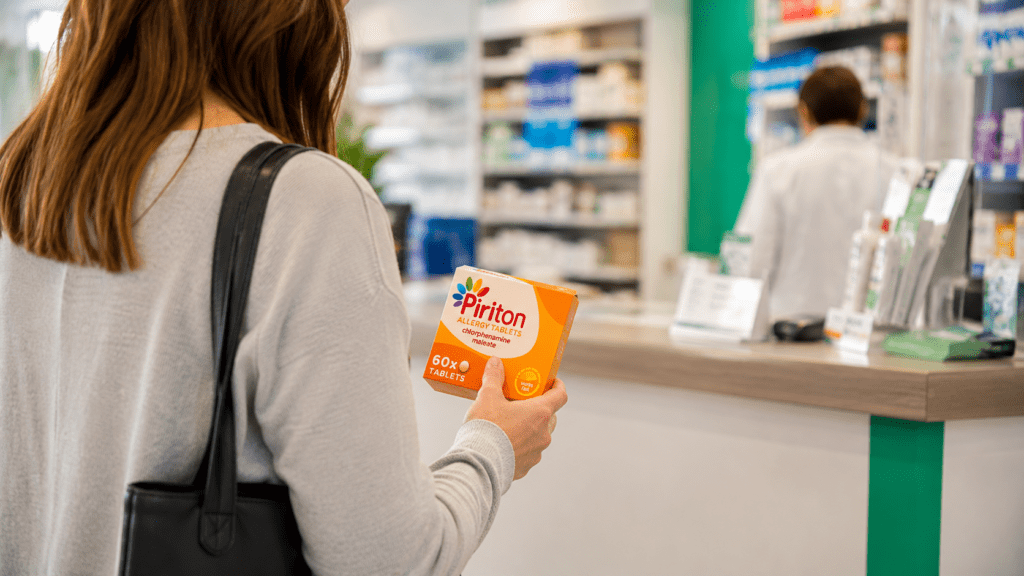
When the pollen count rises across West Yorkshire, many of us start reaching for the tissue box. If you live in Cleckheaton, you know how quickly a lovely spring walk can turn into a sneezing fit. You need relief, and you need it fast.
But here is the catch:
Standing in the pharmacy aisle, you are faced with countless allergy relief tablets. Should you choose a traditional drowsy option or a newer, non-drowsy alternative?
Using Piriton for hay fever is a tried and tested method that many of our patients rely on. However, it is not always the best choice for every situation. In this guide, we will break down exactly how Piriton compares to modern non-drowsy antihistamines, helping you make the right choice for your family’s health.
Let us dive right in and explore what makes these allergy medications different.
Key Takeaways:
- Taking Piriton for hay fever effectively relieves allergies but often causes drowsiness.
- Newer antihistamines like cetirizine offer better daytime symptom control.
- Chlorphenamine remains excellent for severe nighttime itching.
- Always consult your local pharmacist for tailored allergy advice.
- Piriton usually starts working within thirty minutes.
- Never mix different sedating allergy medications.
Understanding Piriton for Hay Fever
Piriton is a well-known brand name for a medicine called chlorphenamine. It is a first-generation antihistamine, which means it belongs to the older class of allergy medications.
So, how does it actually work?
When you come into contact with pollen, your immune system mistakenly treats it as a threat. Your body releases a chemical called histamine, which causes all those frustrating symptoms like a blocked nose, itchy eyes, and constant sneezing. Piriton steps in to block the effects of this histamine, bringing you much-needed comfort.
According to the NHS guidance on chlorphenamine, this medicine gets to work very quickly, usually within thirty minutes to an hour. This makes it incredibly effective for sudden, severe allergic reactions.
Guide’s Corner:
If your hay fever symptoms suddenly flare up after spending time in the garden, taking a dose of Piriton can offer rapid relief. Just remember that its effects only last for about four to six hours, so you may need to take it a few times throughout the day if your doctor advises.
Piriton vs Non-Drowsy Antihistamines
When we look at Piriton vs non-drowsy antihistamines, the most significant difference is how they affect your energy levels. Because chlorphenamine crosses into your brain more easily than newer medications, it has a strong sedative effect.
Think about it:
Do you really want to feel sleepy during an important meeting or while driving the kids to school? Probably not. This is why second-generation, non-drowsy antihistamines were developed.
Medicines like cetirizine and loratadine (often sold under brand names like Piriteze or Clarityn) are designed to block histamine without causing that heavy, sluggish feeling. When comparing cetirizine vs Piriton, cetirizine provides all-day relief with just one single dose, whereas Piriton requires multiple doses and often makes you feel drowsy.
If you need to stay alert, non-drowsy allergy relief tablets are generally the better daytime choice. You can find more details in the NHS advice on antihistamines.
Pro Tip:
Keep a pack of non-drowsy antihistamines for your daily routine. If you find your current medication is not working, pop into the pharmacy. We can help you switch to a different active ingredient, such as fexofenadine, which might suit you much better.
When Is a Drowsy Antihistamine the Better Choice?
You might be wondering why anyone would choose a drowsy medication if non-drowsy options exist.
Here is the deal:
Sometimes, drowsiness is exactly what you need. If your hay fever symptoms are incredibly severe, or if you are suffering from itchy skin that keeps you awake all night, Piriton can be a lifesaver. The sedative effect helps you drift off to sleep while the medicine calms your allergic reaction.
We frequently recommend chlorphenamine for allergies that strike at night. It is also excellent for children who cannot stop scratching insect bites or chickenpox spots, giving both the child and the parents a peaceful night’s rest.
However, you must be aware of Piriton side effects. Aside from sleepiness, it can cause a dry mouth, dizziness, and blurred vision. You should never drive or operate machinery if you feel impaired after taking it.
Choosing the Best Antihistamine for Hay Fever
Finding the best antihistamine for hay fever often requires a little bit of trial and error. What works perfectly for your neighbour might not work for you.
Let me explain:
If you need everyday protection so you can go to work or school without sneezing, choose a non-drowsy option like cetirizine or loratadine. If you only need occasional, fast-acting relief for a sudden flare-up, or if you need help sleeping through the itchiness, Piriton is a fantastic option to keep in your medical cabinet.
Do not forget that our pharmacy team is always here to guide you. If your allergies are causing broader health issues, or if you need advice on other services like a private prescription, we are ready to assist. We can even help you manage your health year-round, whether you need a seasonal flu vaccination or want to explore our weight loss support programs to boost your overall immune system.
Note:
Try combining your antihistamine tablets with a steroid nasal spray and soothing eye drops. Treating your symptoms locally often provides the most robust defence against high pollen counts.
Local Pharmacy Care in Cleckheaton
If you live in Cleckheaton, Bradford, Batley, Birkenshaw, Liversedge, Heckmondwike, or nearby areas, Cleckheaton Pharmacy can help you access trusted pharmacy advice and convenient local care. Our team is always on hand to discuss your hay fever treatment UK options. We also provide consultations through the NHS Pharmacy First scheme, meaning you might not even need to see your GP for minor health concerns.
Summing Up
Managing your allergies does not have to be a daily struggle. Using Piriton for hay fever is highly effective when you need fast relief or help sleeping through severe symptoms. However, for everyday daytime use, non-drowsy antihistamines like cetirizine or loratadine will usually serve you better by keeping you alert.
By understanding the differences between these medications, you can take control of your hay fever and enjoy the beautiful West Yorkshire sunshine. If you are ever unsure which tablet is right for you, please visit us at Cleckheaton Pharmacy. We are always happy to help you find the perfect allergy solution.
Frequently Asked Questions
Does Piriton make you sleepy?
Yes, Piriton is a drowsy (sedating) antihistamine. The active ingredient, chlorphenamine, crosses into the brain and commonly causes sleepiness. Because of this, it is highly recommended that you do not drive, cycle, or operate heavy machinery if the medication makes you feel tired or dizzy.
Which is better: cetirizine or Piriton?
Neither is strictly better; they just serve different purposes. Cetirizine is a non-drowsy antihistamine that is ideal for daytime use because it lasts up to 24 hours without making you tired. Piriton works much faster but causes drowsiness, making it better suited for sudden flare-ups or nighttime use.
Can I take Piriton and a non-drowsy antihistamine together?
You should never mix two different antihistamines unless a doctor has specifically told you to do so. In some severe cases, a doctor might suggest taking a non-drowsy tablet in the morning and a drowsy one at night, but you must always seek professional medical advice first.
How fast does Piriton work for hay fever?
Piriton is very fast-acting. You will usually start to feel relief from your hay fever symptoms within thirty minutes to an hour after taking the tablet or syrup. This rapid action is why many people keep it on hand for unexpected allergic reactions.
Is Piriton safe for young children?
Piriton syrup is licensed for children aged one year and older. However, dosages vary strictly by age and weight. You must always read the packaging carefully or speak to a pharmacist before giving any allergy relief medication to a young child to ensure it is safe.