

| TL;DR Pharmacy First UK is an NHS initiative that allows patients to receive treatment for seven common conditions directly from trained pharmacists without seeing a GP. Conditions include sinusitis, sore throat, ear infections, infected insect bites, impetigo, shingles, and uncomplicated urinary tract infections in women. Pharmacists can provide clinical assessments and supply prescription-only medicines such as antibiotics when clinically appropriate. Services like the NHS Pharmacy First consultation at Cleckheaton Pharmacy make accessing treatment faster, easier, and more convenient. |
The NHS continues to expand community pharmacy services to improve access to healthcare and reduce pressure on GP surgeries. One of the most significant developments in recent years is the Pharmacy First UK service, a national NHS initiative that allows patients to receive assessment and treatment for common conditions directly from a pharmacy.
Instead of waiting days or weeks for a GP appointment, eligible patients can visit their local pharmacy, receive a clinical consultation, and if appropriate, obtain prescription medicines, including antibiotics or antivirals. Cleckheaton Pharmacy provides the NHS Pharmacy First service, allowing patients to receive professional advice and treatment for a range of common conditions.
Understanding the Pharmacy First UK Service
The NHS Pharmacy First service is a national healthcare initiative launched across England in January 2024 to improve access to primary care. Under the Pharmacy First scheme UK, trained pharmacists can assess and treat several common conditions that previously required a GP appointment.
The service builds upon earlier NHS programmes such as the Community Pharmacist Consultation Service and minor ailments schemes, expanding the role of pharmacists in frontline healthcare.
The goal of Pharmacy First is to:
- Improve patient access to treatment
- Reduce waiting times for GP appointments
- Allow GPs to focus on more complex medical conditions
- Provide faster treatment for common infections and minor illnesses
According to the NHS England Pharmacy First policy framework, the service is expected to provide millions of consultations each year, significantly improving access to primary care.
What Is Pharmacy First?
Pharmacy First is increasingly common as more patients discover they can receive treatment without visiting a doctor.
The Pharmacy First UK service allows community pharmacists to:
- Assess symptoms through a structured clinical consultation
- Provide advice and self-care guidance
- Supply over-the-counter medicines where appropriate
- Prescribe prescription-only medicines for certain conditions
- Refer patients to a GP or urgent care if necessary
This means that many minor infections and illnesses can now be treated safely and quickly at your local pharmacy. Pharmacists delivering this service complete additional clinical training and follow NHS clinical guidelines to ensure safe prescribing decisions.
Why the NHS Introduced the Pharmacy First Scheme UK
The NHS faces increasing demand for GP appointments. Many of these appointments involve minor illnesses that pharmacists can safely manage.
Research from NHS England suggests that approximately 10 million GP appointments per year could be managed by community pharmacies instead.
By enabling pharmacists to treat common infections, the Pharmacy First scheme UK aims to:
- Reduce pressure on GP surgeries
- Improve patient access to care
- Speed up treatment for infections
- Prevent complications through early intervention
Pharmacies are widely accessible healthcare settings. Many offer extended opening hours, allowing patients to receive treatment quickly without having to wait for a GP appointment.
NHS Pharmacy First Service pathways
The NHS Pharmacy First service explained involves two main consultation pathways.
1. Walk-in Consultation
Patients can visit a participating pharmacy directly and request a Pharmacy First consultation for symptoms related to one of the seven covered conditions.
2. GP or NHS Referral
Patients may also be referred to a pharmacy by:
- GP surgeries
- NHS 111
- Urgent treatment centres
- NHS digital triage services
During the consultation, the pharmacist conducts a structured clinical assessment that may include:
- Reviewing symptoms
- Assessing medical history
- Evaluating risk factors
- Checking current medications
- Determining whether treatment is appropriate
If the condition meets NHS criteria, the pharmacist can supply prescription medication under the Pharmacy First protocol. If symptoms suggest a more serious condition, the pharmacist will refer the patient to appropriate medical care.
Conditions Treated Under Pharmacy First
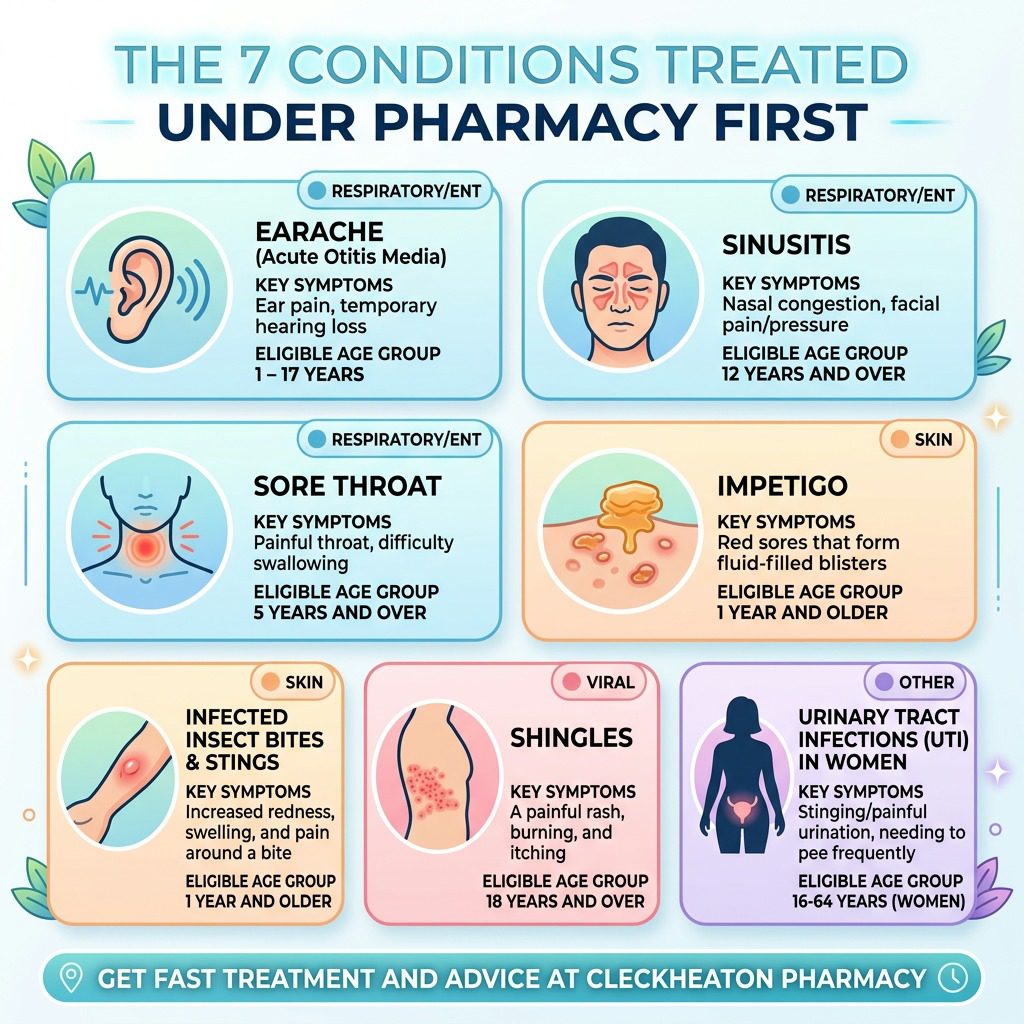
One of the most important aspects of the Pharmacy First UK service is that pharmacists can now treat seven specific common conditions under nationally agreed clinical protocols.
These conditions are commonly seen in primary care and are considered safe for pharmacist management when patients meet specific criteria.
The conditions treated under Pharmacy First include:
- Acute otitis media (ear infection)
- Acute sinusitis
- Sore throat
- Impetigo
- Infected insect bites
- Shingles
- Uncomplicated urinary tract infection in women
Each condition has defined eligibility criteria, age limits, and treatment pathways.
1. Acute Otitis Media (Ear Infection)
Acute otitis media is a common infection of the middle ear, particularly affecting children.
Typical symptoms include:
- Ear pain
- Fever
- Irritability in children
- Temporary hearing reduction
Under the Pharmacy First treatment UK protocol, pharmacists can assess children aged 1 to 17 years with suspected ear infections.
If bacterial infection is likely and symptoms meet clinical criteria, the pharmacist may prescribe antibiotics. NICE supports targeted antibiotic use for ear infections when symptoms are severe or prolonged.
2. Acute Sinusitis
Sinusitis occurs when the sinuses become inflamed due to infection or allergies.
Symptoms may include:
- Facial pain or pressure
- Nasal congestion
- Thick nasal discharge
- Headache
- Fever
Most cases of sinusitis are viral and resolve without antibiotics. However, under Pharmacy First treatment UK guidelines, pharmacists can identify cases where bacterial infection may require antibiotic treatment.
Patients aged 12 years and older may be eligible for treatment under the Pharmacy First protocol.
3. Sore Throat
A sore throat is one of the most common reasons people seek medical advice.
Symptoms include:
- Pain when swallowing
- Fever
- Swollen tonsils
- Redness in the throat
Eligible patients aged 5 years and older may receive treatment under the Pharmacy First UK service.
4. Impetigo
Impetigo is a contagious bacterial skin infection commonly affecting children.
It typically appears as:
- Red sores or blisters
- Honey coloured crusts on the skin
- Itching or discomfort
Under the Pharmacy First scheme UK, pharmacists can prescribe topical or oral antibiotics depending on the severity of infection. Early treatment helps prevent the infection from spreading to other parts of the body or to other people.
Clinical guidance from NICE supports antibiotic treatment for impetigo in appropriate cases.
5. Infected Insect Bites
Insect bites are common, especially during warmer months. Most bites are harmless, but some can become infected.
Symptoms of infection may include:
- Increasing redness or swelling
- Pain or warmth around the bite
- Pus or discharge
Under the NHS Pharmacy First service, pharmacists can assess infected bites and determine whether antibiotics are needed.
Patients aged 1 year and above may be eligible for treatment through the Pharmacy First consultation pathway.
6. Shingles
Shingles is caused by reactivation of the varicella zoster virus, the same virus responsible for chickenpox.
Common symptoms include:
- Painful rash on one side of the body
- Tingling or burning sensation
- Blisters that form a band-like pattern
Early treatment with antiviral medicines can reduce complications and shorten the duration of illness.
Patients aged 18 years and older may be assessed and treated under the Pharmacy First pathway.
7. Uncomplicated Urinary Tract Infection
Urinary tract infections are common among women and often cause uncomfortable symptoms.
Symptoms may include:
- Burning sensation when urinating
- Frequent urination
- Lower abdominal pain
- Cloudy or strong-smelling urine
Under the Pharmacy First treatment UK protocol, pharmacists can treat uncomplicated UTIs in women aged 16 to 64.
Pharmacy First Consultation: What Happens During the Appointment?
A Pharmacy First consultation is a structured clinical appointment carried out in a private consultation room at the pharmacy.
The pharmacist will:
- Discuss your symptoms
- Review your medical history
- Assess medication allergies
- Check the eligibility criteria for the service
- Determine the most appropriate treatment
Possible outcomes include:
- Self-care advice
- Over-the-counter medication
- Prescription treatment under Pharmacy First
- Referral to a GP or urgent care
The consultation typically takes 10 to 15 minutes, making it one of the fastest ways to receive treatment for minor infections.
Pharmacy First Eligibility
The Pharmacy First eligibility criteria vary slightly depending on the condition being treated.
In general, patients must:
- Be registered with a GP in England
- Have symptoms related to one of the seven covered conditions
- Meet the age criteria for that condition
Pharmacists must follow NHS clinical protocols when determining eligibility. If the patient does not meet the criteria, they may still receive advice or be referred to another healthcare provider.
Pharmacy First Treatment UK: What Medicines Can Be Prescribed?
Under the Pharmacy First treatment UK protocols, pharmacists may prescribe certain medications, including:
- Antibiotics
- Antivirals
- Topical antibiotic creams
- Pain relief medicines
- Symptom relief medications
All prescribing follows national clinical guidelines designed to ensure safe and responsible use of medicines. This helps reduce unnecessary antibiotic use while ensuring patients receive treatment when it is medically appropriate.
The Benefits of the NHS Pharmacy First Service
The NHS Pharmacy First service offers several advantages for patients and the healthcare system.
Faster Access to Treatment
Patients can receive treatment on the same day without waiting for a GP appointment.
Reduced Pressure on GP Surgeries
By managing common conditions at pharmacies, GP appointments are freed up for more complex medical cases.
Accessible Local Healthcare
Community pharmacies are often located on high streets and offer extended opening hours.
Expert Clinical Advice
Pharmacists are highly trained healthcare professionals with extensive knowledge of medicines and common illnesses.
When Pharmacy First May Not Be Suitable
While the Pharmacy First scheme UK covers many common infections, it is not suitable for every medical situation. Patients should seek urgent medical care if they experience:
- Severe pain
- Difficulty breathing
- Chest pain
- Persistent high fever
- Severe allergic reactions
Pharmacists are trained to recognise warning signs and will refer patients to appropriate medical services when necessary.
Access the NHS Pharmacy First Service at Cleckheaton Pharmacy
Cleckheaton Pharmacy offers the NHS Pharmacy First service, providing fast and convenient treatment for eligible conditions. Patients can visit the pharmacy for a consultation with a trained pharmacist who can assess symptoms and provide treatment when appropriate.
Receiving care through the Pharmacy First service helps patients avoid unnecessary GP visits while ensuring safe and effective treatment.
Final Thoughts
The Pharmacy First UK service represents a major step forward in improving access to primary healthcare. By enabling pharmacists to assess and treat common infections, the service helps patients receive treatment faster while reducing pressure on GP surgeries.
With structured clinical protocols, pharmacist training, and strong evidence supporting pharmacy-led care, the NHS Pharmacy First service is becoming an essential part of modern healthcare in England. For patients experiencing symptoms related to the seven covered conditions, visiting a pharmacy may now be the fastest and most convenient way to receive treatment.
FAQs
What are the 7 conditions for Pharmacy First?
The seven conditions treated under the Pharmacy First UK service include ear infections, sore throat, sinusitis, impetigo, infected insect bites, shingles, and uncomplicated urinary tract infections in women. Pharmacists can assess symptoms and provide treatment according to NHS clinical guidelines.
What can be treated under Pharmacy First?
Pharmacy First allows pharmacists to assess and treat several common infections and minor conditions. This includes ear infections in children, bacterial sore throat, sinus infections, impetigo skin infections, infected insect bites, shingles, and uncomplicated urinary tract infections in eligible patients.
Can pharmacists treat ear infections?
Yes. Under the NHS Pharmacy First service, pharmacists can assess and treat acute otitis media in children aged 1 to 17 years. If symptoms meet clinical criteria, the pharmacist may prescribe antibiotics or provide advice on symptom management.
Can the Pharmacy First scheme prescribe antibiotics?
Yes. The Pharmacy First scheme allows pharmacists to prescribe antibiotics and antivirals when clinically appropriate. Prescribing follows NHS clinical protocols designed to ensure antibiotics are used safely and only when medically necessary.