

| TL;DR Pharmacists can assess and treat many common conditions without a GP appointment. NHS Pharmacy First allows treatment and medication supply for selected conditions. Advice, treatment, and referrals are available in one place. Walk-in access makes pharmacies fast and convenient. Supports self-care and helps reduce pressure on NHS services. |
When you feel unwell, your first instinct may be to contact your GP. However, many common conditions can be treated quickly and effectively at your local pharmacy, often without the need for an appointment or long waiting times.
Pharmacists are highly trained healthcare professionals who can assess symptoms, recommend treatments, and provide NHS health advice. At Cleckheaton Pharmacy, we support patients every day with a wide range of concerns, offering accessible, reliable, and timely care within the community.
What Can Your Pharmacist Help With?
Pharmacists are trained to manage a wide variety of everyday health conditions. Many issues that people assume require a GP can often be safely treated at the pharmacy.
Respiratory conditions
Pharmacists can help with symptoms such as coughs, colds, sore throats, and mild sinus congestion. They can recommend appropriate treatments, advise on symptom relief, and identify when symptoms may need further medical review.
Skin conditions
Common skin concerns such as eczema, dermatitis, fungal infections, and mild bacterial infections can often be treated with over the counter or pharmacy-supplied medicines. Pharmacists can assess severity and recommend the most suitable treatment.
Pain management
From headaches to muscle aches and period pain, pharmacists can advise on safe and effective pain relief. They ensure correct dosing and help you choose the right medication based on your symptoms and medical history.
Digestive issues
Conditions such as acid reflux, constipation, diarrhoea, and nausea can usually be managed with pharmacy advice and treatment. Pharmacists can also provide dietary and lifestyle guidance to support recovery.
Allergies
Hay fever, skin reactions, and eye irritation are common and manageable conditions. Pharmacists can recommend antihistamines, nasal sprays, and eye drops tailored to your symptoms.
In each case, pharmacists do not just provide products. They assess your symptoms and ensure the treatment is appropriate and safe.
The NHS Pharmacy First Scheme Explained
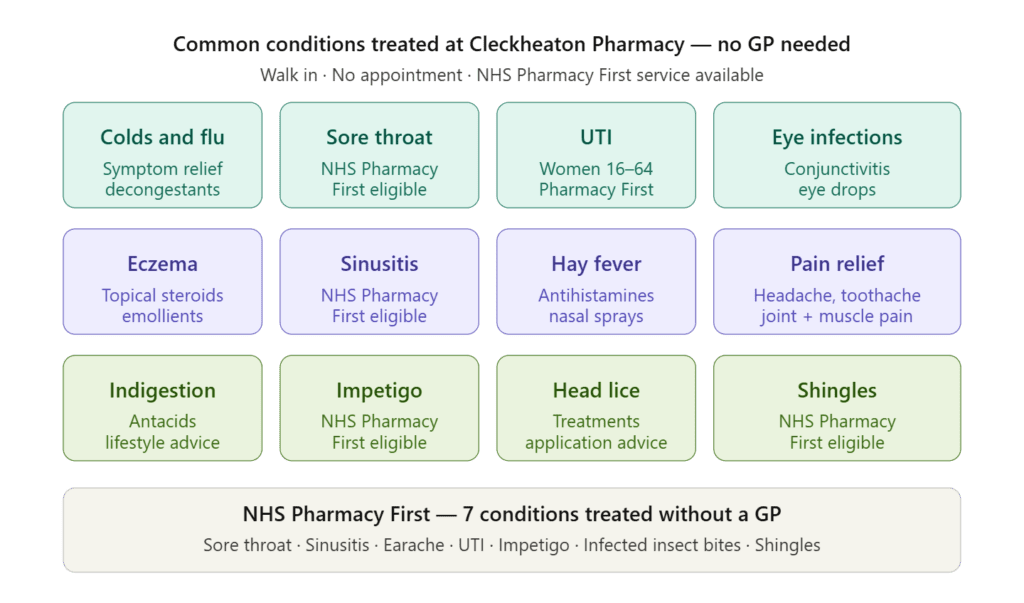
The NHS Pharmacy First scheme has significantly expanded the role of community pharmacies. It allows pharmacists to assess and treat certain conditions directly, including supplying prescription-only medicines when appropriate.
Conditions covered under Pharmacy First:
- Ear infections in children
- Impetigo
- Infected insect bites
- Shingles
- Sinusitis
- Sore throat
- Urinary tract infections in women
How this benefits you:
No GP appointment needed
You can walk into the pharmacy and be seen without waiting days or weeks.
Clinical assessment on the spot
A trained pharmacist will assess your symptoms and determine the most appropriate treatment.
Treatment provided immediately
Where suitable, medication, including antibiotics may be supplied during the same visit.
This service improves access to care, speeds up treatment, and reduces unnecessary pressure on GP practices.
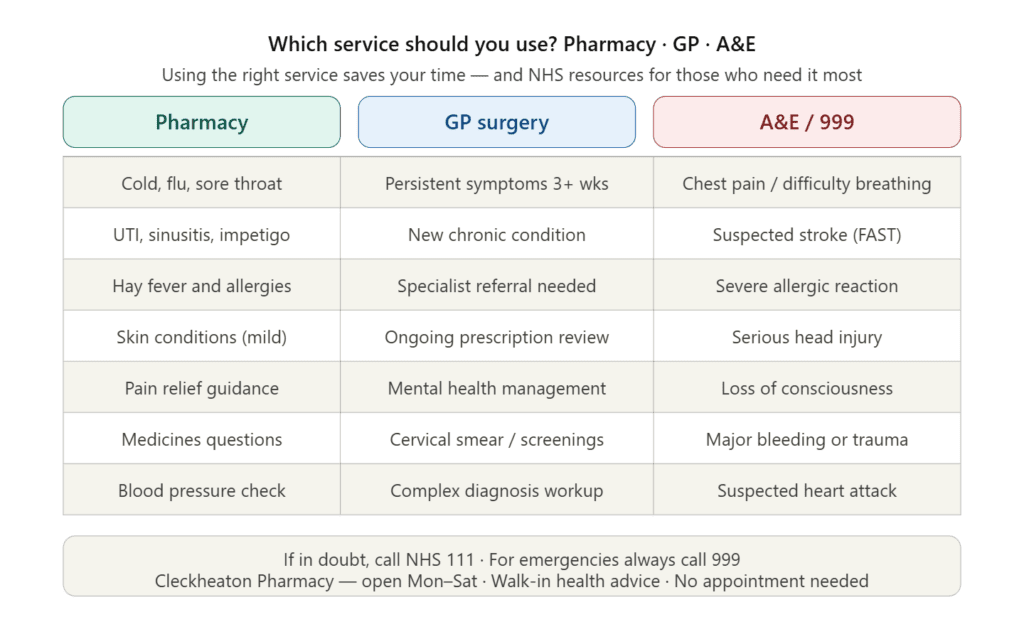
Pharmacy vs GP vs A&E: Making the Right Choice
Understanding where to go for healthcare can save time and ensure you receive the right level of care.
Visit a pharmacy for:
- Minor illnesses such as colds and sore throats
- Skin conditions and rashes
- Digestive issues
- Medication advice and minor pain
Pharmacies are ideal for quick, non-urgent concerns that can be managed without specialist care.
Visit your GP for:
- Persistent symptoms lasting several weeks
- Ongoing or complex health conditions
- Chronic disease management
- Issues that do not improve with pharmacy treatment
GPs are best suited for more complex or long-term medical needs.
Visit A&E for:
- Chest pain or suspected heart attack
- Severe breathing difficulty
- Serious injury or trauma
- Loss of consciousness
Emergency services should always be used for life-threatening situations.
Making the right choice ensures faster care for you and helps the NHS run more efficiently.
Additional Services Offered by Pharmacies
Pharmacies offer a wide range of services that go beyond treating minor illnesses.
Blood pressure checks
Regular monitoring helps detect hypertension early and supports long-term heart health.
Smoking cessation support
Pharmacists provide structured programmes, nicotine replacement options, and ongoing guidance to help you quit smoking.
Weight management advice
You can receive support on healthy eating, physical activity, and sustainable weight management strategies.
Contraception services
Access oral contraception directly through the NHS pharmacy contraception service.
Vaccinations
Pharmacies provide flu vaccines and travel vaccinations, making prevention more accessible.
These services support prevention as well as treatment, helping you maintain overall health.
How Pharmacists Support Self-Care
Self-care is an important part of maintaining your health and managing minor conditions at home. It involves recognising common symptoms, using appropriate treatments, and knowing when to seek further help.
Benefits of self-care:
- Faster relief from symptoms
- Reduced reliance on GP appointments
- Greater confidence in managing your health
Essential items for your home:
- Pain relief medication such as paracetamol or ibuprofen
- Antihistamines for allergies
- A thermometer to monitor temperature
- Basic first aid supplies
Pharmacists can help you build a personalised home medicine kit based on your needs.
Why Pharmacies Are an Essential NHS Resource
Pharmacies are one of the most accessible healthcare services available.
Key advantages:
No appointment needed
You can walk in and speak to a healthcare professional immediately.
Convenient locations
Most people live close to a pharmacy, making access easy.
Extended opening hours
Many pharmacies are open evenings and weekends.
Trusted professionals
Pharmacists are highly trained and regulated healthcare providers.
Despite these benefits, pharmacy services are still underused compared to GP services.
How Pharmacists Work Alongside GPs
Pharmacists and GPs work together as part of a wider healthcare system.
How this collaboration works:
Referrals when needed
If your condition requires further investigation, your pharmacist will refer you to a GP or specialist.
Medication support
Pharmacists ensure your medicines are safe, effective, and used correctly.
Ongoing care
Follow-up advice and monitoring help ensure your treatment continues to work.
This collaboration ensures you receive the right care at the right time.
Conclusion
Pharmacies play a vital role in modern healthcare by providing accessible, professional advice and treatment for a wide range of everyday conditions. The NHS health advice pharmacy model allows patients to receive timely care without unnecessary delays or barriers.
By using your local pharmacy for common health concerns, you can save time, reduce pressure on GP services, and take a more active role in managing your health. It is a practical and effective way to access care when you need it most.