
| TL;DR Dengue fever is a mosquito-borne viral infection common in Asia, the Caribbean, and other tropical regions. The Dengue vaccine is available in the UK but only for travellers with a confirmed previous dengue infection. It requires two doses, three months apart, and is not available on the NHS. If you are not eligible, strict mosquito bite prevention remains your most effective protection. |
Planning a trip to Southeast Asia or the Caribbean from Cleckheaton, Bradford, or anywhere in West Yorkshire? Dengue fever should be on your radar. Interest in dengue fever vaccination UK has grown sharply since QDENGA, the first licensed dengue vaccine for UK travellers, became available in 2023.
But eligibility rules are strict, the vaccine is not available on the NHS, and many patients are confused about whether they qualify. This guide cuts through that confusion: what dengue is, who can get it the vaccine, and what to do if you cannot.
What is dengue fever and where do you catch it?
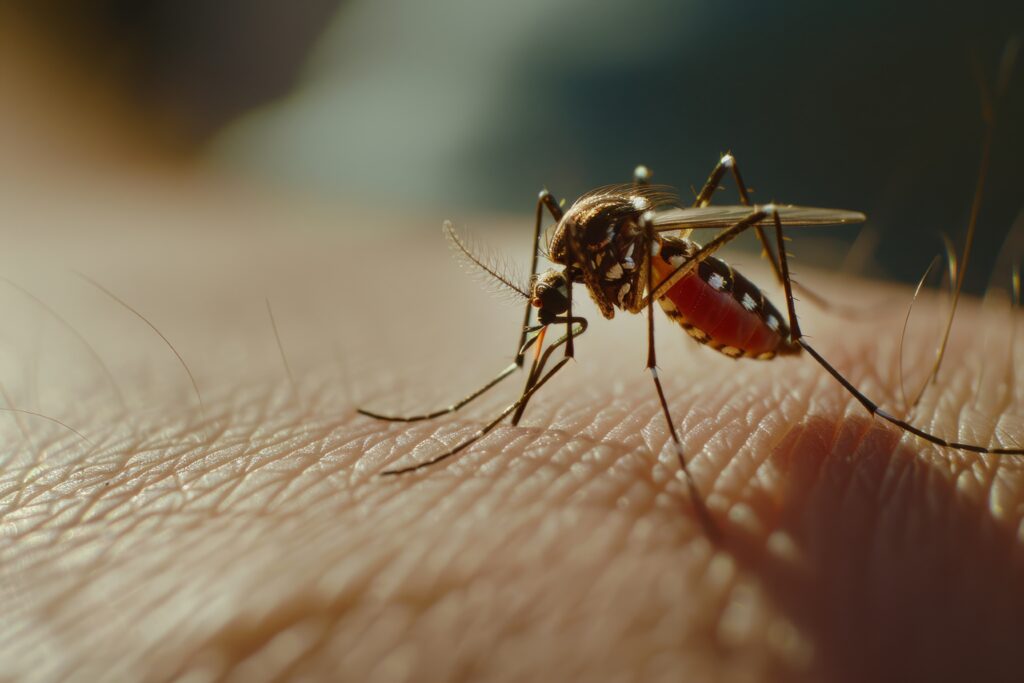
Dengue is a viral illness spread by the Aedes aegypti mosquito. Unlike the mosquitoes that transmit malaria, this species feeds during the day, which means standard bednet advice alone is not enough. According to the NHS, dengue is found throughout the tropics and subtropics, including Southeast Asia, Central and South America, the Caribbean, the Pacific Islands, and parts of Africa.
NaTHNaC (TravelHealthPro) also notes increasing transmission in southern Europe, particularly Spain, France, Croatia, and Italy, driven by climate-related shifts in mosquito range.
There are four dengue virus types, known as serotypes (DENV1 to DENV4). Infection with one does not protect against the others. More importantly, a second infection with a different serotype carries a higher risk of severe dengue, a potentially life-threatening condition.
Symptoms typically appear four to ten days after a mosquito bite and include:
- High fever
- Severe headache
- Pain behind the eyes
- Joint and muscle pain
- Nausea
- Rash
The NHS notes that most people recover within one to two weeks, but severe dengue, characterised by bleeding, intense abdominal pain, and fluid accumulation, requires urgent hospital care.
Understanding dengue fever vaccination UK
Dengue fever vaccination is a live attenuated vaccine providing protection against all four dengue serotypes. It is given as two doses, three months apart, and is licensed from the age of four.
NaTHNaC published this updated guidance, confirming that QDENGA is now recommended in the UK only for individuals with prior confirmed dengue infection. Seronegative travellers, those who have never had dengue, are not suitable candidates at this time, because of a theoretical risk of more severe illness if they encounter certain serotypes after vaccination.
Contraindications for dengue fever vaccination include;
- Pregnancy
- Breastfeeding
- Immunocompromised (for example, those on immunosuppressive therapy or living with HIV)
- Hypersensitivity to vaccine components, and age under four.
- If you are planning to become pregnant, you should wait at least one month after your final dose before trying to conceive.
Vaccination does not replace insect protection. The NHS and NaTHNaC both emphasise that DEET-based repellents, covering up at dawn and dusk, and sleeping under treated nets remain essential, even after vaccination.
Who qualifies? The previous dengue infection requirement explained
This is where most patients get stuck. Under current JCVI guidance, you need a prior confirmed dengue infection to receive the dengue vaccine in the UK. That confirmation can come from:
- A documented clinical diagnosis at the time of illness, ideally with blood test results
- Serology (a blood test checking for dengue antibodies), which can be arranged through your GP or a private lab
The problem is that many dengue infections are mild or even asymptomatic. You might have had dengue during a previous travel and never known. If you suspect you have had dengue but have no documentation, a serology test can help clarify your status.
At Cleckheaton Pharmacy, we can advise you on how to confirm your dengue serostatus and, where applicable, coordinate the process alongside your broader travel health consultation.
How to access dengue fever vaccination UK at a local pharmacy
One of the most common questions we hear is whether you need a GP referral. You do not. Travel vaccinations can be accessed directly through a pharmacy. If you are planning travel from Cleckheaton, Batley, Bradford, or the surrounding West Yorkshire area, here is how the process typically works:
- Check your eligibility. Ring or visit us to discuss your travel plans and previous dengue history. If you are seronegative, the consultation will focus on bite avoidance and overall travel health.
- Arrange serology if needed. If your dengue status is unclear, we can advise on testing before or at your appointment.
- Book your first dose. Ideally, at least three months before travel, to allow the second dose to be completed in time.
- Book your second dose. Three months after the first. If your travel date is sooner, a single dose still provides meaningful protection, but the full two-dose schedule is preferred.
Book your travel health consultation at Cleckheaton Pharmacy by calling us directly. No GP referral is needed, and we offer appointments to suit working schedules.
If you do not qualify: reducing dengue risk without the vaccine
For seronegative travellers who are not eligible for QDENGA, risk reduction relies on consistent mosquito bite avoidance. The NHS recommends:
- DEET-based insect repellent at 20 to 50% concentration, applied to exposed skin
- Wearing long-sleeved clothing and trousers, particularly during the hours around dawn and dusk when Aedes mosquitoes are most active
- Using insecticide-treated mosquito nets and screens
- Avoiding areas with standing water, where mosquitoes breed
It is also worth checking TravelHealthPro’s destination-specific pages to understand seasonal dengue risk. Travelling outside peak transmission periods, where your itinerary allows, can meaningfully reduce exposure.
Conclusion
Dengue fever is a real and growing risk for UK travellers heading to Asia, the Caribbean, and increasingly parts of southern Europe. The dengue fever vaccination UK landscape changed significantly in 2023 and again in 2024 when the JCVI updated eligibility guidance to require prior dengue infection. If you qualify, getting vaccinated is a sensible part of your travel health plan.
Get advice early, ideally three months or more before travel. Book your travel health consultation at Cleckheaton Pharmacy and speak to one of our pharmacists about your specific plans, destinations, and health history. Speak to our pharmacist for personalised advice before making any health decisions.
FAQs
If you had a confirmed blood test diagnosis at the time, that documentation is ideal. If you are unsure, a serology test can check for dengue antibodies. Speak to us at Cleckheaton Pharmacy or your GP about arranging this.
In most cases, yes it can generally be co-administered with other travel vaccines, including hepatitis A and typhoid. Your pharmacist will review your full vaccination schedule to confirm what is appropriate.
Each dose costs approximately £100, so a full two-dose course is around £200. It is not available on the NHS. Prices should be confirmed at the time of booking, as they are subject to review.